
Partitioning
Partitions that suit how the building gets used
Partition systems designed and installed for fire resistance, sound attenuation, strength, robustness and height.
Grosvenor Gardens needed meeting rooms and break-out areas that tenants could adapt. The Nadler needed hotel rooms with privacy built in. Newhall School needed classrooms that could change as the school grows.
Each is a different brief for the same trade, so we start from how the space will be used.
Where we install them
- Offices and meeting rooms
- Hotel bedrooms and corridors
- Apartments and communal areas
- Classrooms and school halls
- Studios and production spaces
- Retail and mixed-use units
What we look at first
Performance
Fire resistance, sound attenuation and robustness are set before the stud and board are chosen.
Height
Taller walls need the right system from the start, so height is checked at design stage.
The interfaces
Partitions, linings and ceilings come from one team, so junctions are agreed once.
Where we have done it
Grosvenor Gardens
Partitioning carried out to create flexible office layouts, meeting rooms, and break-out areas, allowing tenants to adapt spaces according to their needs.

The Nadler
Partitioning used to create flexible layouts for hotel rooms and administrative spaces, ensuring privacy, comfort, and functionality.
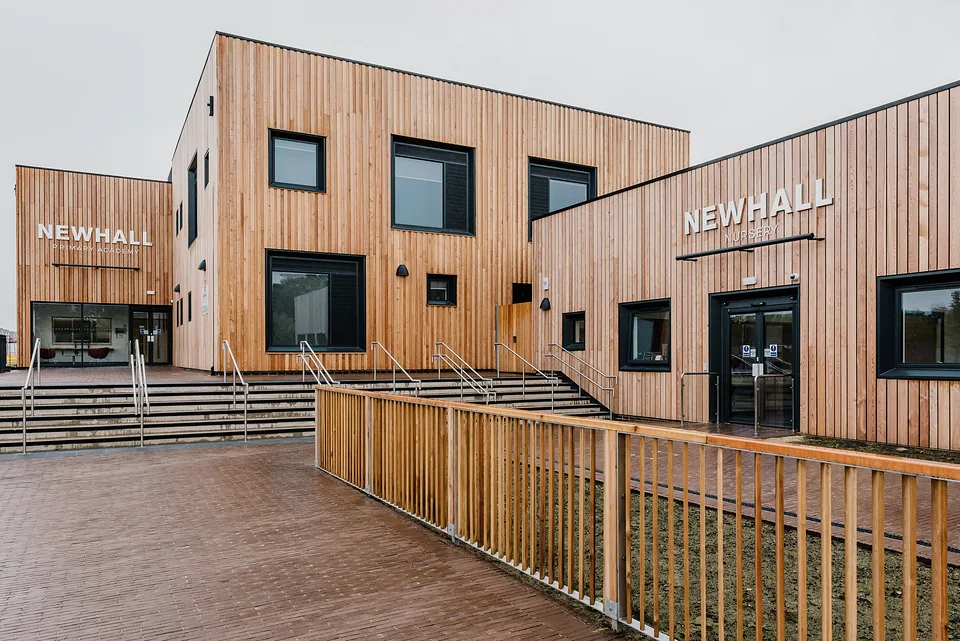
Newhall School
Partitioning implemented to create flexible classroom layouts, meeting rooms, and communal areas, allowing for adaptability as the school's needs evolve.

25 Moorgate
Partitioning of office spaces, meeting rooms, and communal areas to optimise functionality while maintaining aesthetic appeal.
Common questions
What is the difference between partitioning and dry lining?
Partitioning builds new walls to divide a space. Dry lining usually means lining walls and ceilings with plasterboard. Most projects include both.
Can one partition be both fire-rated and acoustic?
Yes. The build-up changes with the board type, the insulation and the stud, and the specification sets the performance it has to reach.
Why do partitions fail sound tests?
Usually at the junctions and penetrations rather than in the middle of the wall. Our Part E guide explains the common faults.
Can partition walls be moved or altered later?
Yes, and that is one of their biggest advantages. Because stud partitions are non-loadbearing, they can be relocated, removed or reconfigured with far less disruption than solid masonry walls. This makes them ideal for offices and commercial spaces where layouts change over time.
Often delivered with
 Service
Dry Lining
Walls, linings and ceilings for every sector.
 Service
Acoustic Solutions
Acoustic insulation, walls and ceilings.
 Guide
Why Partitions Fail Part E Sound Tests
Most failures trace to gaps, rigid links and missing absorbent material at junctions, all of which Approved Document E and SCI guidance describe.