Fire Protection
Fire-rated walls, linings and ceilings
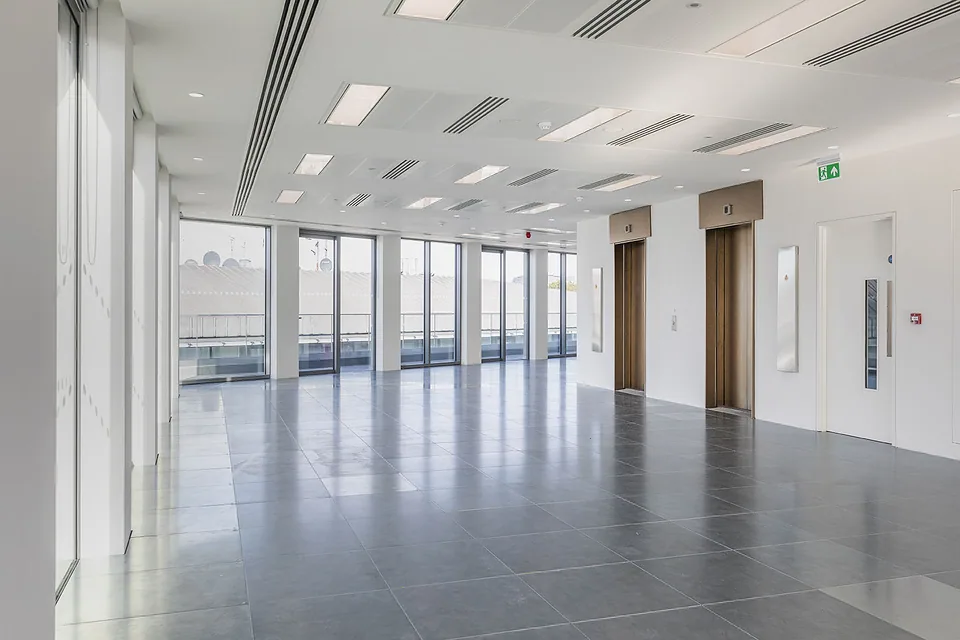
Fire-rated construction installed as part of our dry lining and ceiling works.
At 25 Moorgate, the multi-floor project included smoke shafts, lift risers and beam encasement alongside SFS and dry lining.
Fire-rated walls and ceilings are part of the interior solution, so they are coordinated with the rest of the work rather than brought in late.
What this covers
- Fire-rated partitions
- Fire-rated wall linings
- Fire-rated ceilings
- Smoke shaft linings
- Lift riser linings
- Beam encasement

Common questions
What sets the fire rating?
The project's fire strategy and specification. We install to that specification and the system manufacturer's details.
Does the whole system matter, or just the board?
The whole system. A rating depends on the board, the frame, the insulation and the fixings working together as tested.
Which rules apply in England?
Approved Document B covers fire safety, and the Building Safety Act adds duties for those working on buildings.
What is passive fire protection in construction?
Passive fire protection is built into the fabric of a building. It includes fire-rated walls, ceilings and sealed openings that contain fire and smoke within compartments. Unlike alarms or sprinklers, it works without activation, slowing fire spread and protecting escape routes while occupants leave the building.
What is the difference between passive and active fire protection?
Active fire protection responds to a fire, for example alarms, sprinklers and extinguishers. Passive fire protection is part of the building itself, containing fire within compartments through fire-rated walls, ceilings and sealed openings. Most buildings need both.
What materials are used in passive fire protection?
Typical materials include fire-rated plasterboard, mineral wool, fire batts, intumescent sealants and fire-resistant boards. The right choice depends on the fire rating required, the type of wall or floor, and what passes through it.
What is the difference between fire-rated plasterboard and standard plasterboard?
Fire-rated plasterboard has a denser core, often with glass fibre added, so it holds together longer in a fire. Standard board offers some resistance but is not designed for rated walls and ceilings. Where a partition must achieve a fire rating, the full tested system matters, not just the board.